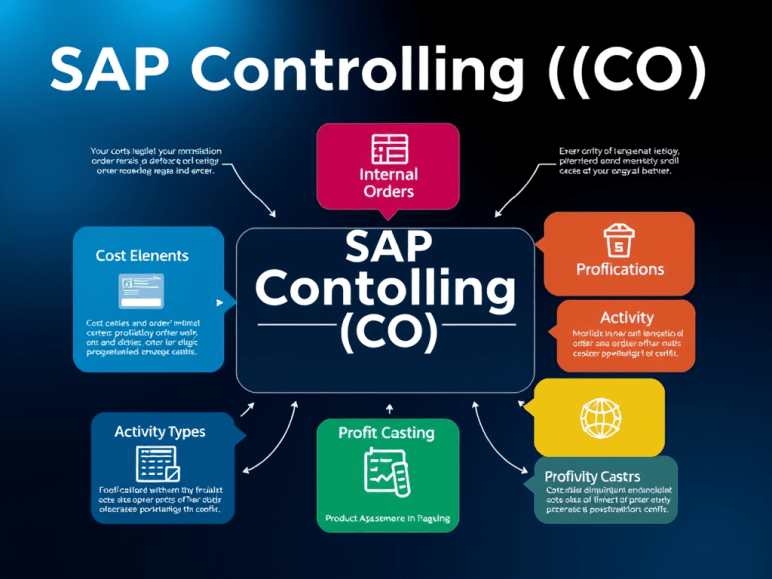
SAP Controlling (CO) is a core module in SAP ERP that helps businesses track, analyze, and optimize costs for better financial decision-making. Below are the fundamental concepts of SAP CO that every beginner should know.
1. Cost Elements
- What? Cost Elements classify different types of costs (e.g., salaries, rent, raw materials).
- Types:
- Primary Cost Elements (linked to FI-GL accounts) – e.g., Electricity Expense (GL Account).
- Secondary Cost Elements (internal allocations) – e.g., Overhead costs distributed to departments.
- Use: Helps in tracking where money is spent.
2. Cost Centers
- What? Departments or functional areas where costs are incurred (e.g., HR, IT, Marketing).
- Purpose:
- Monitor expenses by department.
- Allocate costs for internal reporting.
- Example:
- Cost Center “HR_DEPT” tracks all HR-related expenses.
3. Internal Orders
- What? Temporary cost collectors for projects, events, or campaigns.
- Types:
- Overhead Orders (e.g., Company party expenses).
- Investment Orders (e.g., Machine purchase tracking).
- Use: Helps track short-term costs separately from regular departments.
4. Profit Centers
- What? Business units evaluated for profitability (e.g., Product lines, Regions).
- Purpose:
- Compare profitability across different segments.
- Used for management accounting (not legal reporting).
- Example:
- Profit Center “US_Sales” tracks revenue & costs in the US market.
5. Activity Types
- What? Represents internal activities (e.g., Machine hours, Labor hours).
- Purpose:
- Allocate costs based on internal activities.
- Used in Activity-Based Costing (ABC).
- Example:
- “LABOR_HRS” – Cost of employee hours assigned to production.
6. Product Costing
- What? Calculates the cost of manufacturing a product.
- Components:
- Material Costs (raw materials).
- Labor Costs (production hours).
- Overhead Costs (indirect expenses).
- Use: Helps in pricing decisions and cost reduction.
7. Profitability Analysis (CO-PA)
- What? Analyzes revenue and profit by market segments.
- Dimensions:
- Customer, Product, Region, Sales Channel.
- Use: Helps in strategic decisions (e.g., Which product is most profitable?).
8. Settlement & Allocation
- What? Process of distributing costs from one object to another.
- Methods:
- Direct Allocation (Cost Center → Cost Center).
- Assessment (Overhead costs distributed based on a key).
- Reposting (Moving costs from one object to another).
Conclusion
These basic SAP CO concepts form the foundation for cost accounting and management reporting. Understanding them is crucial for:
✔ Controlling expenses
✔ Improving profitability
✔ Making data-driven business decisions
 Binarybuggs