Often times you might have come across me variable in OO ABAP today with an small example we will see how it is being used in the programs
*&---------------------------------------------------------------------*
*& Report y_class_basics
*&---------------------------------------------------------------------*
*&
*&---------------------------------------------------------------------*
report y_class_basics.

class abap_basics definition.

public section.

     data : num type i value '10'.
     methods display.

endclass.

class abap_basics implementation.


  method display.
       data : num type i value '200'.
              write : 'value = ', num.
              write : 'value in me = ', me->num.
  endmethod.

endclass.

start-of-selection.

DATA(lo_object) = NEW abap_basics( ).
lo_object->display( ).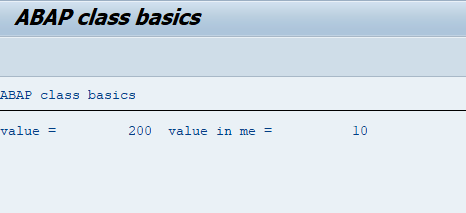
So me always refers to Current calling Object of the class !!
" Select statement
SELECT * FROM mara INTO TABLE @DATA(lt_mara).
@ used in the Select to say where a statement or variable belongs
ls_t001 = VALUE #( bukrs = '1234').In the example above, it refers to a data type of the variable to which the structure is assigned via VALUE
CL_GUI_TIMER class in ABAP
In modern abap we can use something as below which is clean and saves lof of time i.e. when we call method check with lo_object and the it returns it can be checked in one line instead of declaring variables
IF lo_object=>check( ) = abap_false.Select within functions
" Select with functions
SELECT
  bukrs AS bukrs,
  CAST( kokfi AS CHAR( 20 ) ) AS text,
  CASE WHEN stceg = ' ' THEN '-'
       ELSE stceg
  END AS tax
 FROM t001
 WHERE bukrs LIKE 'A%'
   AND waers = @( to_upper( ld_waers ) )
 INTO TABLE @DATA(lt_bukrs).
There is a simple function module in the system for reading the current callstack. With SYSTEM_CALLSTACK you get the current call for the currently running code.
" Compare the two tables
CALL FUNCTION 'CTVB_COMPARE_TABLES'
  EXPORTING
    table_old  = lt_old
    table_new  = lt_new
    key_length = 14
  IMPORTING
    table_del  = lt_del
    table_add  = lt_add
    table_mod  = lt_mod
    no_changes = ld_flag.
class cl_abap_random, which can generate random numbers.
" Create instance with factory
DATA(lo_rand) = cl_abap_random=>create( ).

" Random number from 1 till 6 (integer)
DATA(ld_num) = lo_rand->intinrange( low = 1 high = 6 ).
 Binarybuggs